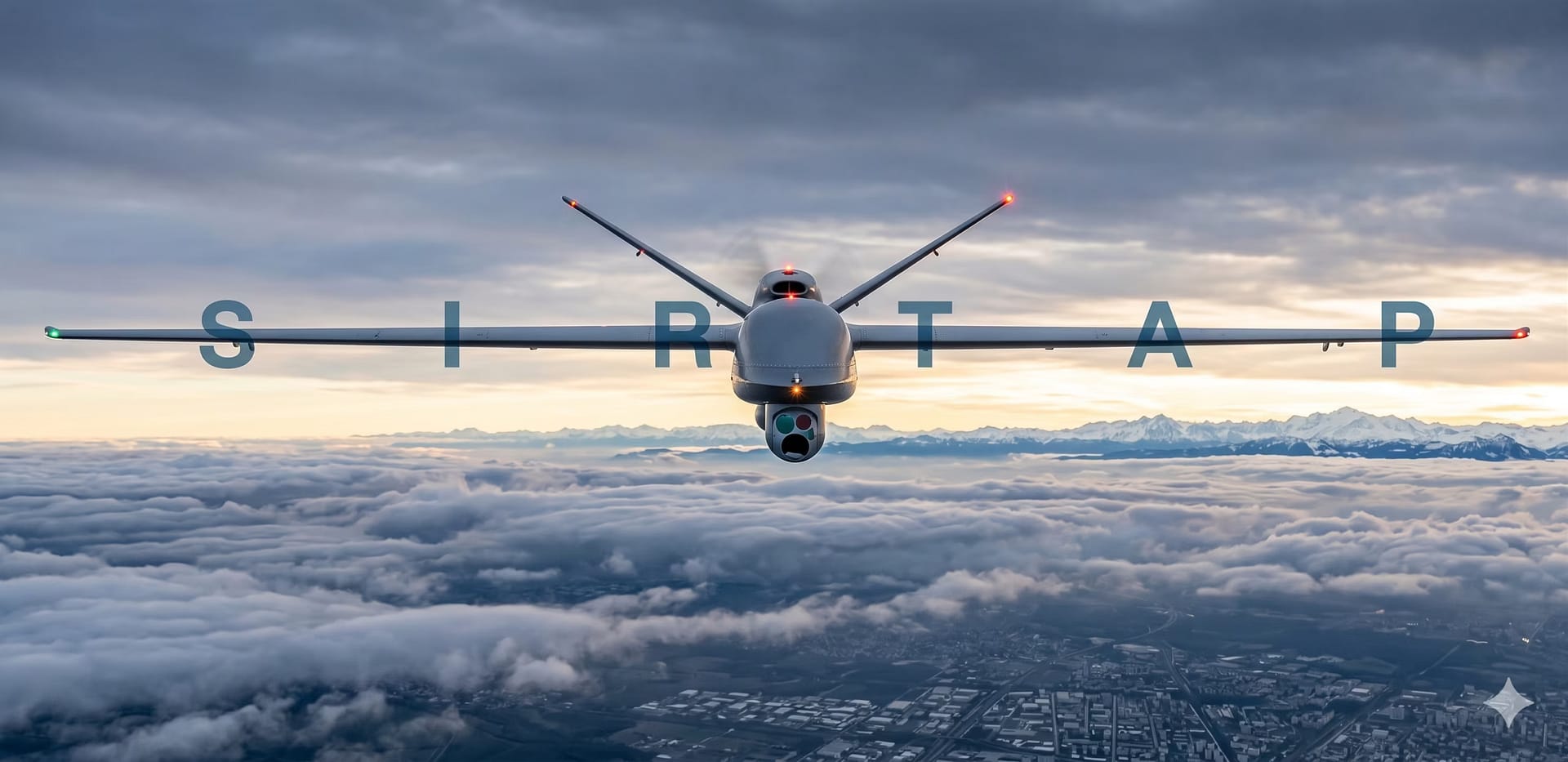
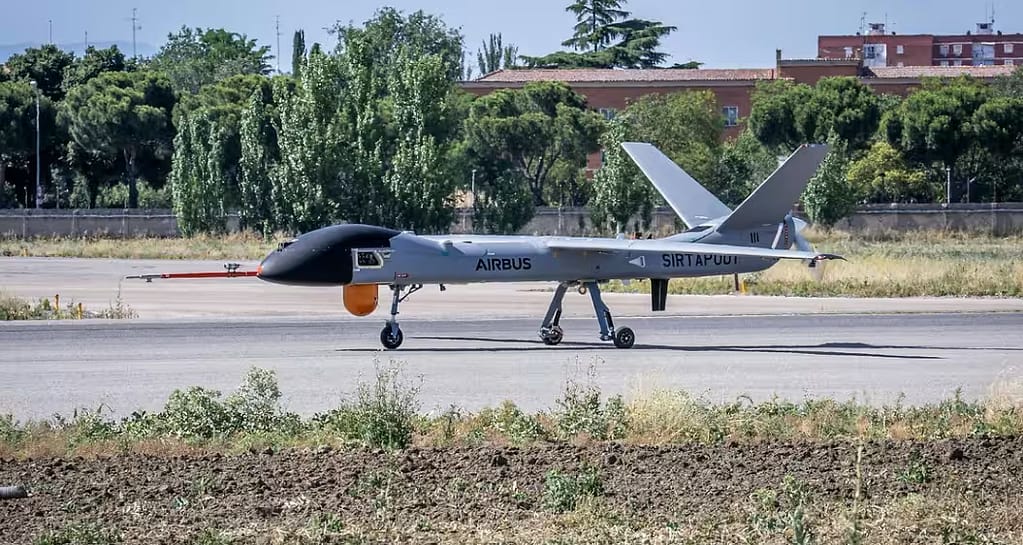
The Airbus SIRTAP U850 (Sistema Integrado de Vigilancia Aérea Táctica) has successfully completed its first taxi test at the Spanish Air Force’s Getafe Air Base runway, marking a critical step toward its maiden flight. This achievement matters for India because the country is preparing to order military drones worth over $2 billion this year, with tactical unmanned aerial systems like SIRTAP becoming essential for modern defence operations.
Background: What Led to This Taxi Test Success
SIRTAP is Airbus Defence and Space’s high-performance tactical uncrewed aerial system (UAS), designed and manufactured primarily in Spain. The programme represents Spain’s first fully indigenous military drone project, with the Spanish Ministry of Defence ordering 27 SIRTAP drones and nine ground-control stations in November 2023.
The assembly of the first SIRTAP prototype concluded in June 2025 at Airbus Defence and Space facilities in Getafe, Spain. Ground testing began shortly after, comprising structural evaluations, main-systems components testing, and software validation.
Timeline: SIRTAP Programme Key Milestones
- November 2023: Spain orders 27 SIRTAP drones (€495 million / $543 million deal)
- June 2025: First prototype assembly completed, ground tests begin
- June 2026: First taxi test successfully completed at Getafe Air Base
- Late 2025/2026: Maiden flight scheduled at INTA’s CEUS test centre in Huelva
- 2026: Full flight-test campaign for airworthiness certification
- 2027: First system delivery to Spanish Armed Forces
Key Developments and Facts About the SIRTAP U850 Taxi Test
The first taxi test represented a critical validation of several key systems:
- Ground control validation: The aircraft was controlled entirely from the ground control station, confirming successful integration of remote piloting systems
- Braking system verification: The taxi test allowed verification of the braking system’s correct integration and performance
- Navigation systems testing: Key navigation systems were tested during the low-speed taxi trials
- High-speed taxi next: After completing low-speed taxi tests, the drone will undergo high-speed taxi trials before moving to Huelva for maiden flight
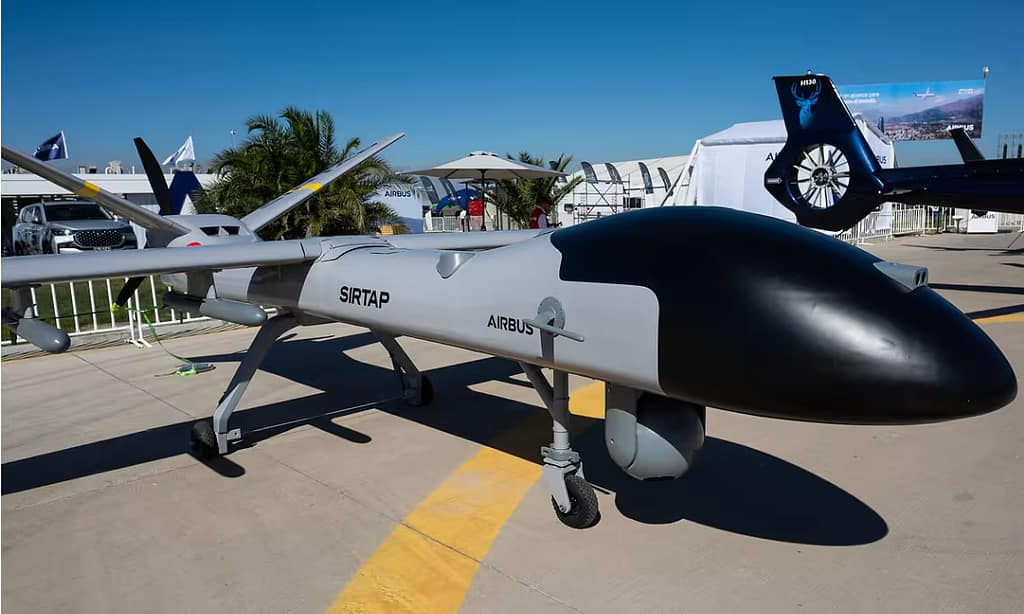
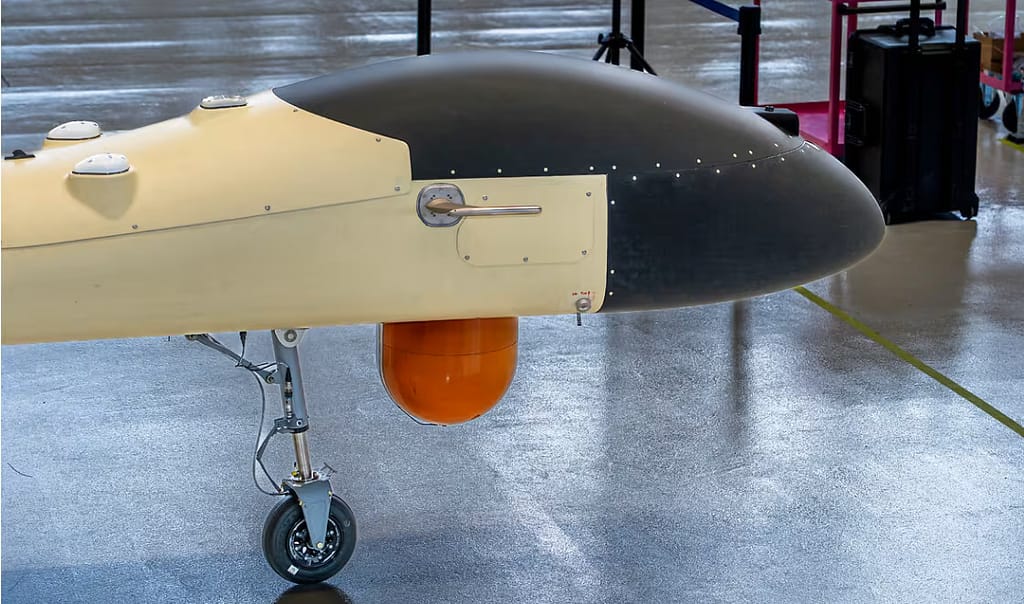
SIRTAP stands for “Sistema RPAS Táctico de Altas Prestaciones” (Tactical High-Performance Remotely-Piloted Air System), classified as a MALE (Medium-Altitude Long-Endurance) UAV. The system is ITAR-free, making it exportable to international customers without US restrictions.
Impact on Indian Passengers, Airlines, and Defence Industry
While SIRTAP is a military drone and won’t directly affect civilian passengers or commercial airlines, this development has significant implications for India’s defence aviation sector:
For India’s Defence Industry:
- India is preparing military drone orders worth over $2 billion (Rs 20,000 crore) this year, the country’s largest-ever unmanned aerial systems acquisition
- The DRDO has announced a strategic pivot toward drones and UAVs as a cornerstone of its 2026 efforts, focusing on high-altitude, long-endurance (HALE) systems
- India has built a regulated drone ecosystem with 38,575 registered UAVs, 39,890 DGCA-certified remote pilots, and 244 approved training organizations as of February 2026
For Make in Defence Push:
- India launched a $234 million (Rs 20 billion) incentive programme for civil and military drone makers to reduce imported component dependency
- The Indian Army plans to induction tens of thousands of locally-made unmanned aerial systems over the next 1-5 years
- India aims to position itself as a global hub for drone manufacturing by 2030
Key Statistics:
- Previous drone order books: ~Rs 30 billion (USD 313 million)
- Next cycle tactical drone purchases: Expected to cross Rs 200 billion (USD 2 billion)
- Growth: Massive surge compared with recent orders
Expert Opinions and Official Statements
Jean-Brice Dumont, Head of Air Power at Airbus Defence and Space, stated: “This new technical achievement for SIRTAP demonstrates Airbus’ agility to drive technological innovation with our aerospace industry partners in a timely manner in accordance with our vision. Designed and manufactured in Spain, SIRTAP will strengthen national sovereignty and will be a benchmark in the tactical unmanned aerial systems segment worldwide”.
Dr. Samir V Kamat, DRDO Chief, announced: “We are looking at this capability arriving in phases over the next one to five years. In-house studies that factored in lessons from ongoing conflicts indicated a requirement for 30 types of unmanned aerial systems (UAS) and loitering munitions for five broad roles. If the sub-segments are counted, we are talking about 80 different types of drones”.
Smit Shah, President of Drone Federation India, noted that “recent global conflicts demonstrate the high reliability and cost-effectiveness of unmanned aerial systems over legacy defense hardware”.
What’s Next: Future Outlook and Timeline
For SIRTAP:
- High-speed taxi trials will follow the completed low-speed tests at Getafe
- The drone will relocate to Huelva for maiden flight expected by late 2025/2026
- Flight-test campaign will run throughout 2026 at CEUS test centre
- Airworthiness type certification will be pursued during 2026 testing
- First delivery to Spain scheduled for 2027
- Potential future versions include naval variants and weapons integration capabilities
- Colombia is also expected to operate SIRTAP systems
For India:
- 2026: Major drone procurement orders expected to be placed with domestic manufacturers
- 2026-2031: Phased induction of tens of thousands of local UAS systems
- 2030: Target to become global drone manufacturing hub
Conclusion
The Airbus SIRTAP U850’s successful first taxi test at Getafe Air Base marks a crucial milestone toward its 2027 delivery to Spain. For India, this development underscores the growing importance of tactical drone systems as the country prepares its historic $2 billion military drone procurement programe. As DRDO pivots toward UAVs and India aims for global drone manufacturing leadership by 2030, readers should follow airline360.in for continued updates on India’s aviation and defence drone developments.